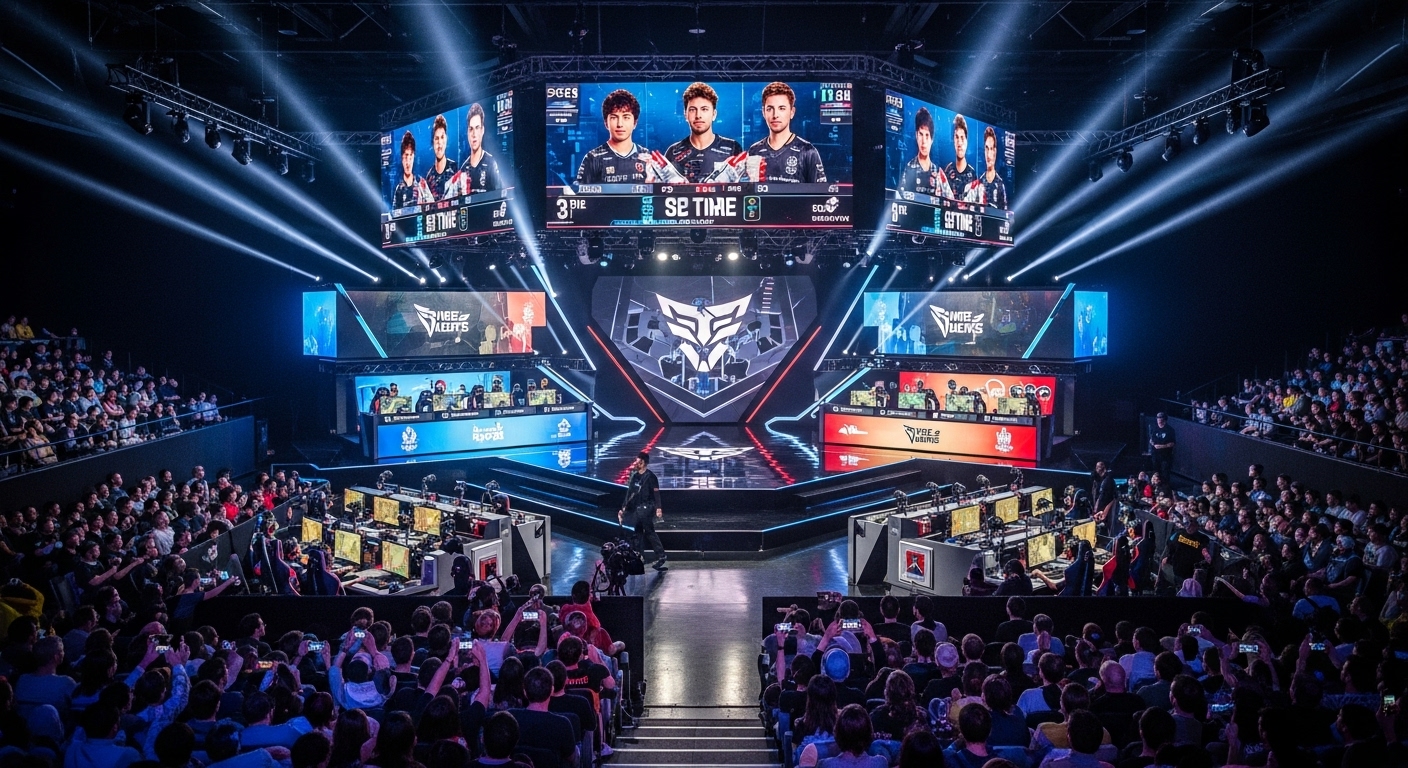
Esports, once a niche hobby confined to small circles of dedicated gamers, has evolved into a global cultural phenomenon. What began as a form of competitive gaming for enthusiasts has blossomed into an enormous, billion-dollar industry, captivating millions of fans worldwide. From the growth of professional gaming leagues to sold-out arenas, esports has not only transformed the world of video gaming but has also become a significant part of mainstream entertainment. In this post, we’ll explore the rapid rise of esports, its impact on the gaming industry, and the future of this thriving sector.
Understanding Esports: More Than Just Gaming
At its most basic level, esports refers to organized, multiplayer video game competitions, particularly between professional players, either individually or in teams. While casual gaming is something many people engage in for fun, esports takes this activity to a higher level, involving extensive training, strategy, and coordination. It’s not just about playing a game but mastering it, competing at the highest possible level.
Esports covers a wide range of genres, with some of the most popular being first-person shooters like Counter-Strike: Global Offensive and Call of Duty, multiplayer online battle arena (MOBA) games like League of Legends and Dota 2, and real-time strategy games such as StarCraft. These games have been carefully crafted to be engaging both for players and for spectators, making them perfect for competitive play.
The esports ecosystem includes professional players, coaches, analysts, casters (commentators), and fans who all contribute to the growth of the industry. Professional players, who often train full-time like athletes, compete in tournaments that offer enormous prize pools, and the games themselves are streamed live on platforms like Twitch, YouTube Gaming, and Facebook Gaming. The rise of these platforms has played a significant role in the rise of esports, allowing fans to follow their favorite players, teams, and events with ease.
The Early History of Esports
The origins of competitive gaming can be traced back to the early days of gaming itself. The first recorded competitive video game event was the Space Invaders Championship held in 1980, which attracted over 10,000 participants. While this event was modest in comparison to today’s global tournaments, it marked the start of a trend that would evolve into the esports phenomenon we see today.
Throughout the 1990s, competitive gaming began to take shape with the rise of games like Doom and Quake. These games introduced online multiplayer modes, allowing players to compete against others from around the world. The introduction of LAN (Local Area Network) parties in the late 90s furthered the growth of competitive gaming. Players would gather at local venues to compete in tournaments, which gave rise to grassroots esports events.
The real turning point for esports came in the early 2000s, particularly in South Korea. The country saw an explosion of interest in StarCraft, a real-time strategy game that became a national pastime. This led to the creation of professional leagues and the establishment of esports as a legitimate career in South Korea. The first televised StarCraft tournaments, aired on cable channels, brought esports into the mainstream, laying the groundwork for the global explosion of competitive gaming in the years that followed.
The Global Expansion and Professionalization of Esports
In the 2010s, esports began its global expansion. Games like League of Legends, Dota 2, and Counter-Strike: Global Offensive became staples of the esports scene, with massive tournaments attracting millions of viewers worldwide. The rise of streaming platforms such as Twitch provided fans with the ability to watch their favorite games and players live, further fueling the growth of esports.
What began as a largely underground, player-driven community began to attract significant investment from both the gaming industry and external companies. Major brands and sponsors, including tech companies like Intel, Nvidia, and Red Bull, began to invest heavily in esports, seeing the potential for exposure to a young, tech-savvy audience. Companies also began sponsoring teams and tournaments, offering substantial financial support in exchange for advertising opportunities.
Esports saw its first truly massive global event in 2013 when The International (the world championship of Dota 2) offered a prize pool of over $2.8 million. This marked a turning point in the scale of competitive gaming, as prize pools for major tournaments continued to grow, with The International offering a prize pool exceeding $30 million in subsequent years.
The success of these tournaments helped establish esports as a serious industry, attracting not only players and teams but also broadcasters, commentators, and analysts. The emergence of esports as a professional sport was solidified with the establishment of leagues like the Overwatch League and the Call of Duty League, where teams are franchised and compete in regular seasons, just like traditional sports leagues.
The Structure of Esports: Teams, Tournaments, and Sponsorships
Esports today is an intricate ecosystem, involving players, teams, organizations, tournament organizers, and sponsors. These various components work together to create a sustainable and professional environment for players and fans alike.
Professional Teams and Players
At the heart of esports are the professional players who compete in tournaments. These athletes often have years of experience, and their dedication to their craft is comparable to that of traditional sports athletes. Many esports players are under contract with professional esports organizations, who pay them salaries, provide training facilities, and support their professional careers.
Esports players are often highly specialized, with many focusing on a specific game or even a particular role within that game. In League of Legends, for example, players can specialize in positions like top lane, mid lane, or support. The strategic nature of these games means that teamwork and individual skill must be in perfect harmony for a team to succeed.
Tournaments and Leagues
Esports tournaments are held all over the world, with some of the most prestigious events being annual competitions. The League of Legends World Championship, The International (for Dota 2), and Intel Extreme Masters are just a few examples of tournaments that attract thousands of live spectators and millions of online viewers. These events often feature professional players competing for millions of dollars in prize money.
In addition to one-off tournaments, many games have established professional leagues. These leagues operate similarly to traditional sports leagues, with teams competing over several months before advancing to the playoffs. The Overwatch League and Call of Duty League are examples of successful franchised leagues that have contributed to the professionalism of esports. Teams in these leagues often represent cities or regions, further increasing the competitive nature of the events.
Sponsorships and Advertising
Sponsorships play a crucial role in the esports industry. Brands see esports as a way to engage with a highly engaged, tech-savvy audience. In return for their support, sponsors receive exposure through team branding, tournament naming rights, and even in-game advertisements. Companies like Coca-Cola, Audi, and ASUS have all invested in esports, understanding the potential for long-term brand loyalty.
In addition to sponsorships, esports organizations also generate revenue through merchandise sales, media rights deals, and ticket sales for live events. This diverse revenue stream has allowed esports to grow and sustain itself as a professional industry.
The Impact of Esports on the Gaming Industry
Esports has had a profound effect on the gaming industry itself. Game developers now recognize the importance of creating titles that are not only fun to play but also conducive to competitive play. Games like League of Legends, Overwatch, and Fortnite are designed to offer both depth and accessibility, allowing for highly competitive play while still appealing to casual gamers.
Moreover, game developers actively support esports by organizing tournaments and offering prize pools. The success of games like Dota 2 and Counter-Strike has shown that competitive gaming can be an integral part of a game’s life cycle, with tournaments and professional leagues serving as an additional draw for players.
Esports has also had a significant impact on game design. Developers often release frequent updates to balance gameplay, adding new features or tweaking existing mechanics based on feedback from professional players. This feedback loop ensures that games remain competitive and enjoyable for both casual and professional players alike.
The Future of Esports
The future of esports is incredibly promising. As the industry continues to grow, more and more people will tune in to watch their favorite games and players. Advances in technology, such as virtual reality (VR) and augmented reality (AR), could further enhance the esports experience, making it even more immersive for both players and viewers.
There are also discussions about the inclusion of esports in traditional sporting events, such as the Olympic Games. While the debate about whether esports should be considered a “true” sport continues, its growing popularity makes it likely that esports will play an even more significant role in mainstream sports culture in the years to come.
In addition to the growth of esports as a spectator sport, its educational and career potential is also increasing. Colleges and universities now offer scholarships for players, and courses in esports management, marketing, and broadcasting are becoming more common. As the industry matures, esports will continue to create new job opportunities and offer a legitimate career path for those passionate about gaming.
Conclusion
Esports has come a long way since its humble beginnings. Today, it stands as a global industry, providing entertainment, employment, and opportunities for millions of players and fans around the world. As it continues to grow and evolve, esports will undoubtedly cement its place as a major player in the entertainment world, offering a thrilling, professional, and accessible form of competitive gaming for fans of all ages. Whether you’re a dedicated player or simply someone who enjoys watching the action, the rise of esports is something that’s impossible to ignore, and its future looks brighter than ever.