Introduction: From Casual Gaming to Global Spectacle
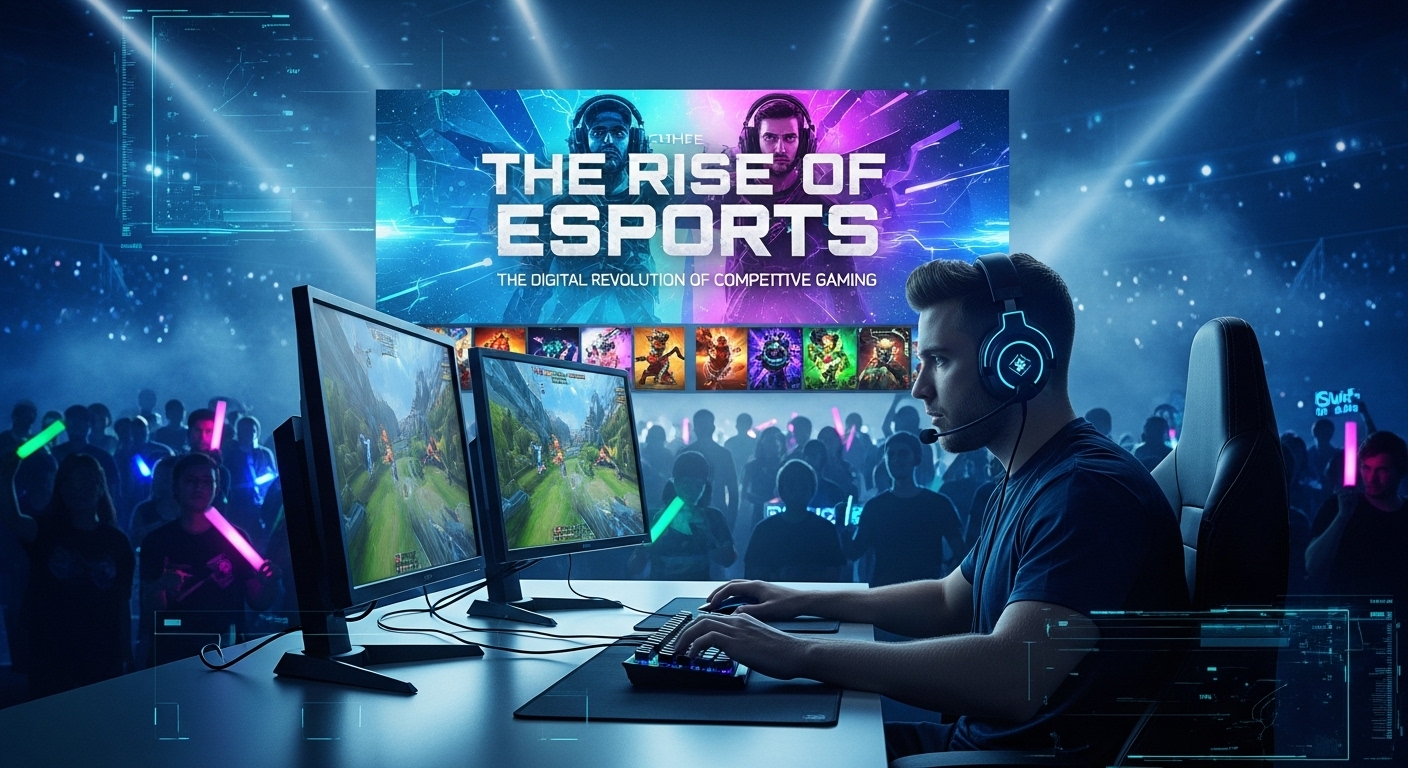
In the early days of video gaming, no one could have predicted that what started as friendly competition between friends would one day fill entire stadiums, attract millions of online viewers, and build multi-million-dollar careers. Yet here we are — in the age of esports, where digital athletes rise to fame not on physical fields, but through lightning-fast reflexes, sharp strategy, and mental precision.
Esports, short for electronic sports, refers to organized, competitive video gaming. It encompasses professional tournaments, leagues, and championships where individuals or teams battle for glory, recognition, and often, massive cash prizes. Over the past two decades, esports has grown from a niche hobby into one of the most influential entertainment industries in the world — rivaling even traditional sports in terms of audience size and cultural impact.
This transformation did not happen overnight. It was driven by technology, community, passion, and a deep evolution of how humans connect, compete, and consume entertainment.
The Origins of Esports: Humble Beginnings
The roots of esports can be traced back to the 1970s and 1980s, when the first competitive gaming events began to take shape. One of the earliest known tournaments was held at Stanford University in 1972 for the game “Spacewar.” The grand prize? A one-year subscription to a science magazine. It may sound trivial now, but that event marked the birth of something monumental.
In the 1980s, the arcade era further fueled competitive gaming. Titles like “Pac-Man,” “Donkey Kong,” and “Space Invaders” created high-score rivalries. Players competed for top rankings on leaderboards, and companies began hosting tournaments to find the best of the best. The 1980 Space Invaders Championship, organized by Atari, attracted over 10,000 participants across the United States — a sign that gaming was evolving from casual entertainment into something far greater.
The Rise of Online Competition: The 1990s and Early 2000s
The 1990s changed everything. With the rise of the internet and home computers, gamers could now compete across vast distances. Games like “Quake,” “StarCraft,” and “Counter-Strike” became early pillars of online competitive play. Local area network (LAN) parties, where players connected their PCs in person to battle each other, became popular and gave birth to a new era of organized tournaments.
In South Korea, a unique phenomenon was unfolding. The government’s investment in high-speed internet and the popularity of PC bangs (gaming cafés) gave rise to a national esports culture. “StarCraft,” in particular, became a cultural obsession. Professional players became celebrities, matches were broadcast on national television, and dedicated esports teams began to form. This was the moment when esports started being recognized as a legitimate sport.
The 2010s: The Era of Global Expansion
The 2010s saw esports explode into mainstream consciousness. With the advent of streaming platforms, especially Twitch and YouTube Gaming, fans could watch live matches from anywhere in the world. Suddenly, esports was not limited to a small community of enthusiasts — it became a global spectacle.
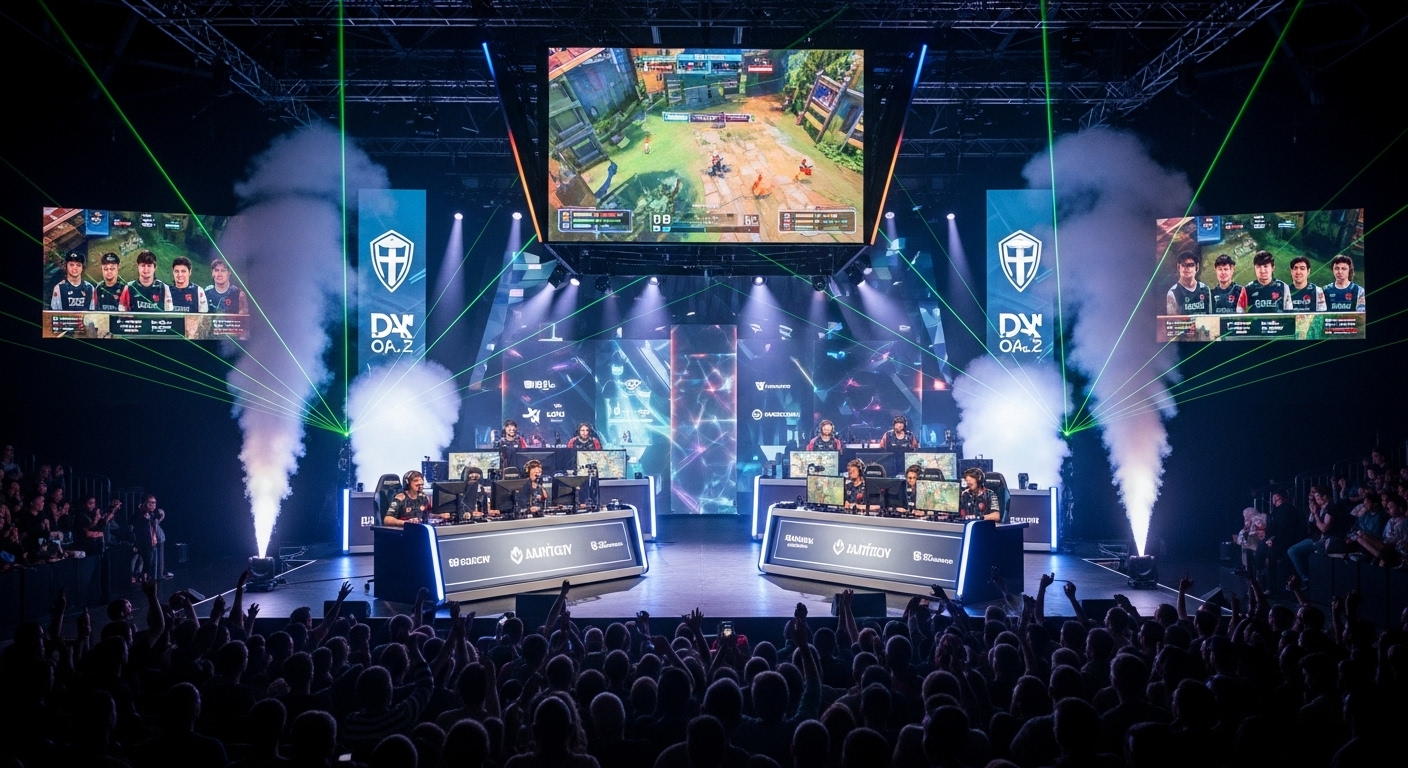
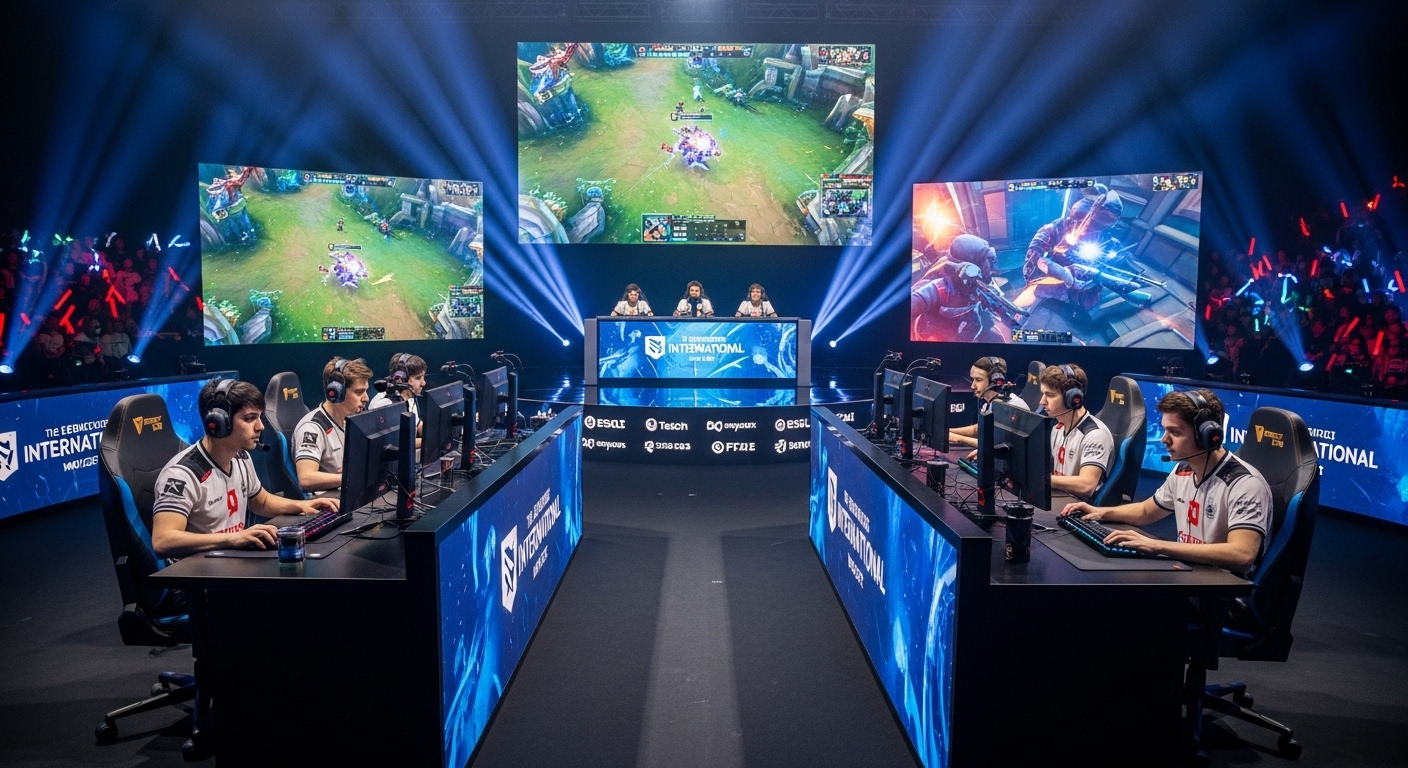
Major games like League of Legends, Dota 2, Counter-Strike: Global Offensive, Overwatch, and Fortnite dominated the scene. International tournaments offered staggering prize pools; The International (Dota 2’s annual world championship) regularly exceeded $30 million in total prizes. League of Legends’ World Championship began filling entire arenas and drawing tens of millions of viewers online. The audience numbers were no longer comparable to small events — they rivaled major sporting broadcasts like the Super Bowl or the FIFA World Cup.
This era also saw the formation of structured leagues, such as the Overwatch League and League of Legends Championship Series (LCS), which introduced seasonal play, franchise teams, and long-term contracts. Esports was no longer a pastime; it was an industry.
The Professional Esports Ecosystem
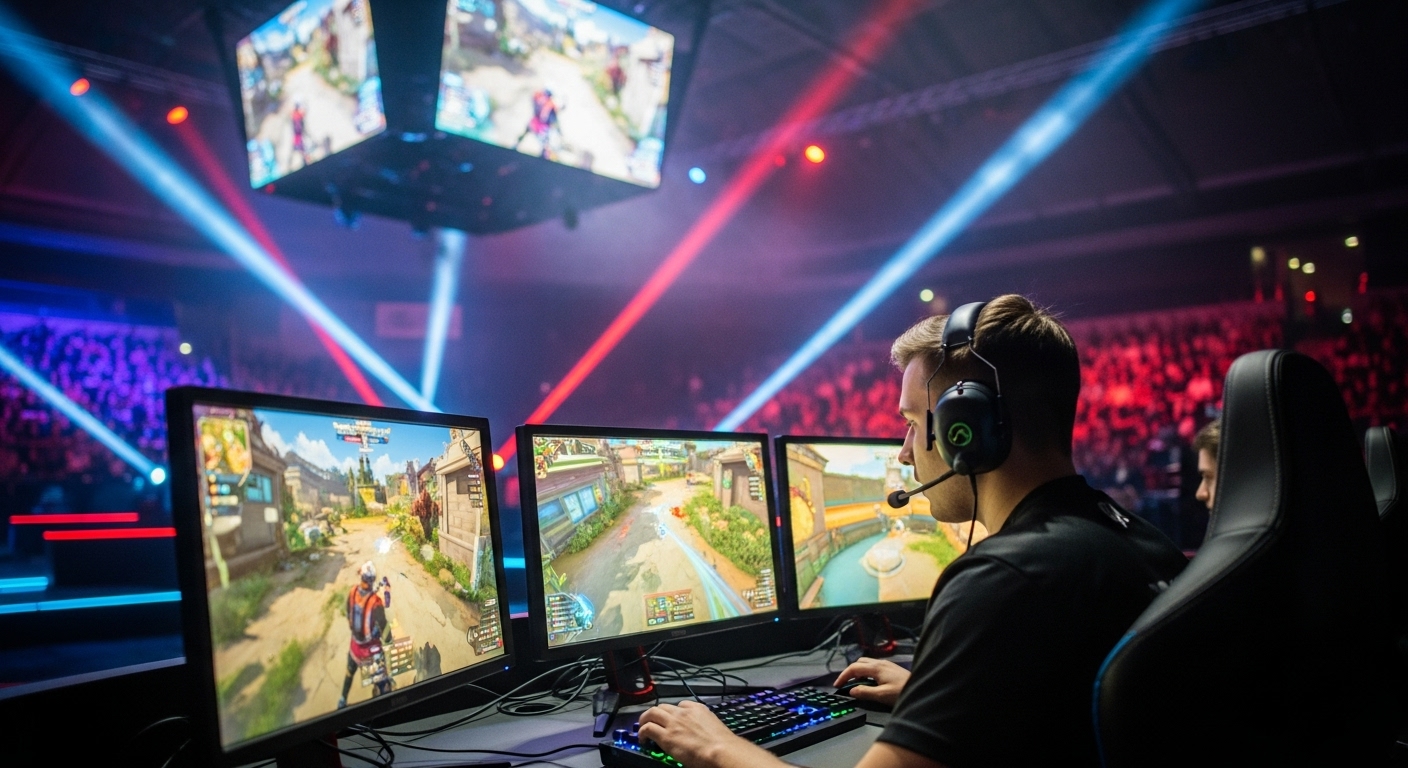
Esports functions much like traditional sports. There are players, teams, coaches, analysts, organizations, sponsors, broadcasters, and governing bodies. Players train for hours daily, studying gameplay footage, refining strategies, and maintaining physical and mental health. Teams hire psychologists, nutritionists, and fitness coaches to ensure peak performance.
Player Development
Professional esports players often start young, honing their skills in ranked ladders or amateur leagues. Many organizations scout talent through online competitions or streaming platforms. Just as football players might join youth academies, esports has its own development pipelines. Some universities now offer scholarships for esports athletes, recognizing the discipline and talent required.
Organizations and Franchises
Major esports organizations such as Team Liquid, Fnatic, Cloud9, and T1 have become household names. They field teams across multiple games, develop merchandise lines, and partner with sponsors ranging from energy drink brands to global tech giants. These organizations function as both business enterprises and talent incubators, managing players’ careers and building global fanbases.
Sponsorships and Media Rights
Brands have recognized the power of esports’ young and engaged audience. Sponsorships are now one of the largest revenue streams in the industry. Companies like Intel, Red Bull, and BMW have invested heavily in esports, sponsoring events and teams. Media rights deals with streaming platforms and broadcasters also generate millions in revenue, making esports a sustainable and lucrative business.
The Cultural Impact of Esports
Esports has transcended gaming. It’s become part of pop culture. The digital athletes of today are influencers, entertainers, and role models. Players like Faker (Lee Sang-hyeok), s1mple (Oleksandr Kostyliev), and Ninja (Tyler Blevins) are as recognizable as traditional sports stars.
A New Kind of Celebrity
Unlike traditional athletes, esports stars build their fame not only through competition but also through online interaction. They stream their practice sessions, engage with fans directly, and cultivate massive personal brands. This interactivity gives esports an intimacy that traditional sports rarely achieve.
Community and Identity
Esports communities are deeply passionate. Fans follow their favorite teams and players with unwavering loyalty. Online forums, Discord servers, and fan art hubs thrive on shared enthusiasm. These communities span the globe, erasing national and linguistic barriers through a shared love for the game.
Education and Career Inspiration
Esports has also influenced how young people view technology and careers. Many fans are inspired to pursue game design, broadcasting, marketing, or coaching. The industry’s ecosystem creates diverse opportunities beyond just playing — including event management, production, journalism, and data analytics.
The Economics of Esports
The esports economy is vast and complex. It includes multiple revenue streams such as sponsorships, merchandise, media rights, ticket sales, in-game purchases, and crowdfunding. The global esports market has reached billions in value, with growth projected to continue as investment flows in from both tech and entertainment sectors.
Prize Pools and Player Earnings
Top-tier tournaments offer multi-million-dollar prizes. For instance, Dota 2’s The International has awarded over $40 million in a single year. Individual players can earn substantial salaries, sometimes exceeding those of traditional athletes in smaller leagues. In addition, they receive income from sponsorships, streaming, and content creation.
The Role of Game Publishers
Game developers play a central role in esports. Companies like Riot Games, Valve, Blizzard, and Epic Games manage competitive ecosystems for their titles, providing infrastructure and prize support. Their control ensures consistent rules and event quality but also raises debates about monopoly power within the industry.
Esports and Traditional Sports: Convergence or Competition?
The relationship between esports and traditional sports is fascinating. Some view them as competitors for attention and sponsorship, while others see synergy and collaboration. In recent years, traditional sports organizations have begun investing heavily in esports. Football clubs like Paris Saint-Germain and Manchester City have their own esports teams. NBA franchises participate in NBA 2K esports leagues. The lines between the two worlds continue to blur.
Moreover, the skills required for esports — teamwork, strategy, reaction speed, and mental resilience — mirror those needed in physical sports. As a result, many countries now officially recognize esports as a legitimate sport, offering visas for professional players and supporting national teams.
The Challenges Facing Esports
Despite its success, esports faces numerous challenges. Like any young industry, it’s still finding its balance between growth, integrity, and sustainability.
Player Burnout
Professional gaming is grueling. Long practice hours, frequent travel, and constant public scrutiny lead to fatigue and stress. Many players retire young, often before age 25. Addressing mental health and providing better support systems are ongoing priorities.
Cheating and Match-Fixing
Esports has battled issues like cheating software, performance-enhancing drugs, and match-fixing. Maintaining integrity is vital for credibility, and leagues have introduced strict regulations and anti-cheat systems.
Gender Diversity and Inclusion
Esports has been criticized for lack of gender representation. While women are active gamers globally, professional esports remains male-dominated. Initiatives are now being introduced to create safer, more inclusive environments and promote female representation in competitive play.
Financial Stability
While top teams thrive, smaller organizations often struggle with inconsistent funding and unstable revenue. The industry must find ways to sustain mid-tier and grassroots levels to ensure long-term stability.
The Role of Streaming and Content Creation
Streaming has revolutionized esports. Platforms allow anyone to broadcast gameplay, enabling new stars to rise independently. This democratization has made esports more accessible and participatory. Fans can watch, learn, and even engage directly with their favorite players in real time.
Esports tournaments are now global media spectacles, complete with professional production, commentators, and virtual fan experiences. The integration of augmented reality, cinematic replays, and interactive broadcasts has transformed viewing into a dynamic, immersive experience.
Esports in Education and Academia
In recent years, esports has entered schools and universities. Educational institutions have started recognizing its value in teaching teamwork, problem-solving, and strategic thinking. Many colleges offer esports programs and scholarships, blending competitive gaming with academic pursuit.
Esports studies as a field of research has also emerged, exploring topics such as psychology, marketing, and the impact of digital competition on society. This legitimization in academia further reinforces esports’ status as a serious discipline.
The Globalization of Esports
Esports transcends geography. While Asia remains a powerhouse — with South Korea, China, and Japan leading — North America, Europe, and even emerging regions like the Middle East and Africa are gaining ground. Each region brings its own culture and style, enriching the global scene.
Tournaments like the League of Legends World Championship or Valorant Champions Tour attract international teams, fostering cross-cultural competition. The multilingual, multicultural fanbase reflects the truly global nature of modern entertainment.
The Future of Esports
The future of esports looks promising and dynamic. As technology evolves, so too will the ways people play and watch games.
Virtual Reality and Metaverse Integration
Virtual reality (VR) and augmented reality (AR) could redefine how esports are played and experienced. Imagine players competing in fully immersive digital arenas, or fans watching matches from inside virtual stadiums alongside others worldwide.
Artificial Intelligence and Data Analytics
AI-driven coaching tools are already analyzing gameplay to help players improve strategies. Advanced analytics may soon allow for real-time decision-making and predictive insights during tournaments, further deepening the competitive experience.
Mainstream Media and Olympic Aspirations
Esports is inching closer to Olympic recognition. The International Olympic Committee has already hosted esports showcases, acknowledging the movement’s cultural relevance. As generations raised on gaming mature, esports’ inclusion in mainstream global events seems inevitable.
Esports as a Career and Lifestyle
Esports is more than just competition; it’s an ecosystem full of career possibilities. Beyond players, the industry employs commentators, analysts, producers, event managers, marketers, developers, and designers. For many, esports offers a way to combine passion with profession.
Streaming, content creation, and social media engagement have opened entrepreneurial opportunities. Gamers can now build personal brands, teach others, or launch their own teams. The ecosystem rewards creativity, persistence, and innovation.
The Emotional Side of Esports
Behind every tournament, there are stories of triumph, failure, teamwork, and resilience. The emotional rollercoaster of esports is what makes it so captivating. Fans watch not only for gameplay but for human stories — the rookie who rises from obscurity, the veteran seeking redemption, the team that defies the odds.
This emotional connection has made esports one of the most engaging forms of entertainment today. It’s not just about winning; it’s about the journey, the struggles, and the moments that unite millions worldwide.
Conclusion: The Legacy of a Digital Era
Esports represents more than just competitive gaming. It symbolizes the digital age’s power to connect, inspire, and innovate. It has bridged cultures, created new heroes, and proven that the virtual world can be just as thrilling, emotional, and meaningful as the physical one.
From a small Stanford tournament to stadium-filling world championships, the journey of esports reflects human adaptability and imagination. What was once a niche subculture has become a defining force in modern entertainment, shaping how we view sports, media, and even identity itself.
As technology continues to evolve, so will esports — faster, bigger, and more integrated into everyday life. The next generation of gamers won’t just play for fun; they’ll compete for the world.
And perhaps, someday soon, the roar of fans in digital arenas will echo as loudly as in any traditional stadium — proof that competition, in any form, is a universal language.