In the past decade, esports has undergone a remarkable transformation from a niche hobby into a global entertainment powerhouse. What was once considered a pastime for a select group of dedicated gamers has evolved into a multi-billion-dollar industry. With millions of fans, professional teams, and international tournaments, esports has carved out its own space in the entertainment world, rivaling traditional sports in both reach and revenue. In this blog post, we will explore the rise of esports, what it entails, and why it’s here to stay.
What is Esports?
Esports, short for electronic sports, refers to organized, multiplayer video game competitions, particularly between professional players, individually or as teams. Unlike casual gaming, esports involves high-level competition in games that require immense skill, strategic thinking, and teamwork. Popular games such as League of Legends, Counter-Strike: Global Offensive, Dota 2, Fortnite, and Overwatch are among the staples of competitive gaming.
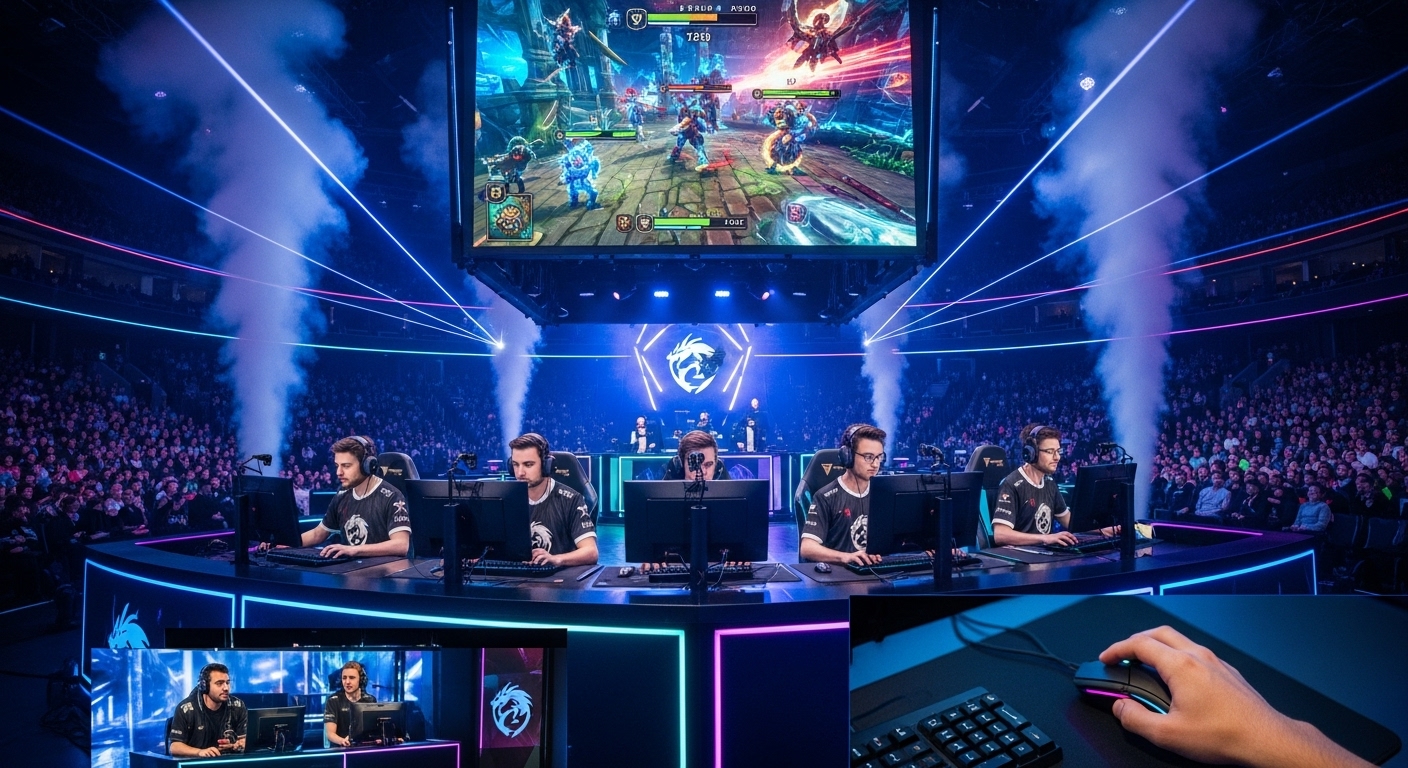
Esports is not just about playing games; it’s about performance, strategy, and, above all, winning. Competitive gaming events are hosted in large arenas or streamed online, drawing massive crowds and audiences. The players themselves are often treated like professional athletes, training rigorously to perfect their skills and strategies. Esports tournaments offer significant cash prizes, sponsorships, and sometimes even fame, making it a viable career for many gamers.
The Growth of Esports: A Global Phenomenon
Esports has experienced exponential growth over the last decade. According to industry reports, the esports market is expected to surpass $1.5 billion in value, with a global audience that now numbers in the hundreds of millions. This growth can be attributed to several key factors:
- The Rise of Streaming Platforms: Platforms like Twitch, YouTube Gaming, and Facebook Gaming have been crucial in turning esports into a mainstream entertainment source. These platforms allow fans to watch live broadcasts of esports tournaments, interact with their favorite players, and even participate in live discussions. Streaming has allowed esports to expand far beyond physical arenas, making it accessible to anyone with an internet connection.
- Professionalization of Esports: Esports has evolved from casual competitions to highly organized professional leagues. Teams are often sponsored by major corporations and compete in leagues that resemble traditional sports in terms of structure. Coaches, analysts, and managers now play critical roles in helping teams optimize performance. Players sign contracts, receive salaries, and train just like athletes in other sports. The growth of these professional organizations has helped elevate esports to a level of legitimacy and recognition that was previously unimaginable.
- Global Fanbase: One of the most fascinating aspects of esports is its ability to transcend borders. Unlike traditional sports, which are often region-specific, esports has a truly global reach. Players and fans from different countries interact, collaborate, and compete on the same digital platforms. This global connectivity has turned esports into a worldwide community, making it one of the most diverse and inclusive forms of entertainment today.
- Major Sponsorships and Investments: Big-name brands, including tech giants like Intel and Nvidia, as well as consumer brands like Coca-Cola and Red Bull, have invested heavily in esports. These companies sponsor tournaments, support players, and collaborate with gaming organizations to promote the esports ecosystem. Such sponsorships help fund tournaments, create lucrative prize pools, and drive further professionalization of the scene.
The Esports Ecosystem: More Than Just the Players
While professional players are the stars of the show, they are just one part of a vast and growing ecosystem. Many other components contribute to the success of esports, both in terms of entertainment and business.
- Coaches and Analysts: Just like traditional sports, esports teams employ coaches and analysts. Coaches work to develop strategies, improve team coordination, and address weaknesses, while analysts study past gameplay to gather insights and refine techniques. This back-end support is crucial to maintaining a team’s competitive edge.
- Event Organizers: Behind every esports tournament is a team of event organizers responsible for everything from coordinating teams to ensuring smooth live broadcasts. These professionals work tirelessly to ensure that tournaments run without a hitch, from logistical challenges to technical support. Major tournaments like The International (Dota 2) and League of Legends World Championship require extensive planning and resources, underscoring the complexity and scale of the esports industry.
- Broadcasting and Commentators: A large part of what makes esports so entertaining is its live broadcast. Esports commentators, also known as casters, bring excitement to the matches with their energetic commentary, much like sportscasters in traditional sports. These casters provide color commentary, explain strategies, and build hype around the action. Their role is essential to creating an engaging viewing experience for fans.
- Fans and Community: The fans are the lifeblood of esports. Without the dedicated viewership and community engagement, esports would not have the global reach that it does today. Fans follow their favorite players and teams, discuss strategies, and cheer on their heroes in the digital arena. Fan engagement is not limited to simply watching events; many fans actively participate in discussions on social media, create fan content, and even organize community-driven tournaments.
Esports and its Cultural Impact
Esports is more than just a form of entertainment; it is a cultural movement. It has fundamentally changed how we view competitive gaming and has become a cultural touchstone for a generation of young people. Here’s how esports is influencing culture:
- Digital Age Competition: Esports represents a new kind of competition—one that doesn’t require physical prowess but instead focuses on mental acuity, quick reflexes, and strategic thinking. This shift has made esports more accessible to a broader range of participants, creating a level playing field where skills matter more than physical abilities. It’s also given rise to a new generation of athletes—digitally native players who compete in a virtual realm.
- Redefining Entertainment: Esports has become a form of entertainment in its own right, with millions tuning in to watch events just as they would a major sports league. The appeal lies not only in the gameplay but also in the personalities of the players and the drama that unfolds during tournaments. This makes esports a compelling form of storytelling, where narratives are shaped by the outcomes of matches, rivalries, and the triumphs and defeats of individual players and teams.
- Gaming as a Career: With esports becoming a multi-million-dollar industry, professional gaming has emerged as a legitimate career path. Players can earn substantial incomes from tournament winnings, sponsorships, and streaming, while other individuals find opportunities in roles such as coaching, broadcasting, event management, and content creation. Gaming has shifted from being a hobby to a professional pursuit, and this shift has made it more appealing to young people considering future career options.
- Influence on Other Industries: The growth of esports has had a ripple effect on other industries, particularly in the realm of technology, fashion, and media. Gaming gear companies are seeing record sales, and esports teams have partnered with brands for exclusive merchandise. Streaming platforms and media outlets are investing heavily in esports content, and video games themselves are becoming more sophisticated, pushing the boundaries of technology. As esports continues to expand, we can expect even more cross-industry collaborations.
The Future of Esports
The future of esports is incredibly promising. With technology continuing to evolve and esports expanding its reach, the possibilities are endless. Here are a few trends to keep an eye on:
- Integration of Virtual and Augmented Reality: As VR and AR technology improve, esports could offer more immersive experiences for both players and spectators. Virtual arenas, where players can physically interact with the game world, could add a new level of excitement to competitions. VR tournaments could bring new forms of interaction, with spectators able to watch matches from within the virtual space itself.
- Esports in Schools and Universities: As esports continues to gain legitimacy, educational institutions are beginning to embrace it as part of their sports and extracurricular programs. Many schools and universities now offer scholarships for esports players, while some have even developed esports programs and teams. This trend could help further professionalize the industry and inspire the next generation of gamers.
- Mainstream Recognition: As esports continues to attract major sponsorships, global broadcasting deals, and large-scale international events, we could see esports achieve full mainstream recognition, even becoming part of traditional sporting events. In fact, some countries are already considering the inclusion of esports in the Olympic Games. As the esports ecosystem matures, it will likely see broader acceptance among audiences who traditionally view gaming as a niche activity.
- Expansion into New Markets: Esports is currently most popular in regions like North America, Europe, and East Asia, but there is growing interest in emerging markets like Latin America, the Middle East, and Southeast Asia. As internet access improves and gaming becomes more ubiquitous, we can expect the esports industry to continue its global expansion, reaching new audiences and creating new opportunities for players and teams alike.
Conclusion: Esports – A Digital Revolution
Esports has come a long way from its humble beginnings and is now one of the most exciting and fast-growing industries in the world. Whether it’s the excitement of watching a live-streamed tournament, the thrill of seeing professional players compete, or the community-driven culture that surrounds it, esports offers a new form of entertainment that appeals to millions of people worldwide.
As the industry continues to expand and evolve, one thing is clear: esports is not a passing trend. It’s a revolution in how we think about competition, entertainment, and even career opportunities. With a global audience, ever-increasing investment, and rapidly advancing technology, the future of esports looks brighter than ever.