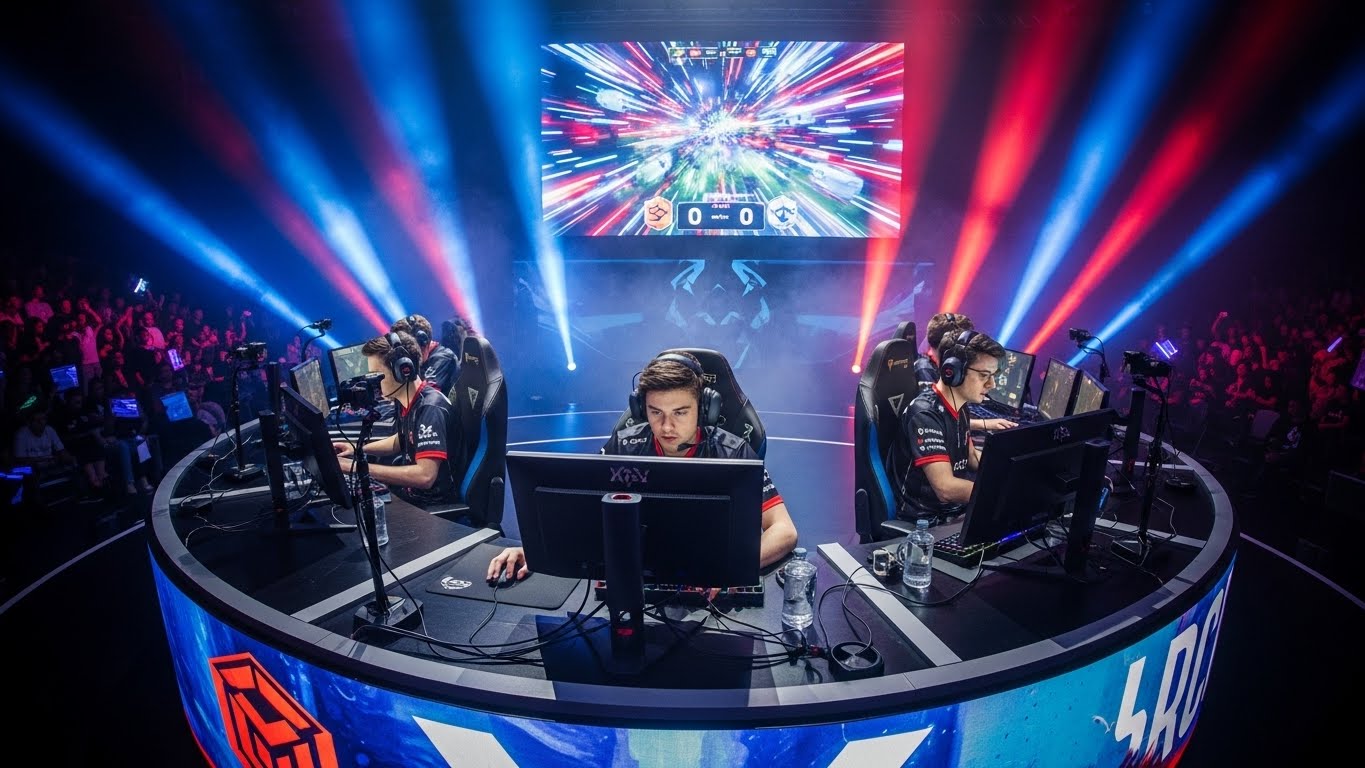
The world of esports has seen explosive growth over the last decade, with millions of players, fans, and viewers tuning in to watch some of the best compete in games like League of Legends, Fortnite, and Counter-Strike: Global Offensive. These traditional esports titles have firmly established their place in the gaming ecosystem, but the next big leap for competitive gaming may lie beyond the screen and into the immersive world of virtual reality (VR).
Virtual reality is quickly becoming a game-changer for various industries, and esports is no exception. Imagine competing in a tournament where the lines between the digital world and reality blur, where players physically move in a three-dimensional environment and interact with their virtual surroundings in real time. That’s the promise of VR in esports. The technology has the potential to revolutionize how games are played, watched, and experienced, adding a new layer of immersion and interactivity to competitive gaming.
In this blog post, we’ll explore how virtual reality is shaping the future of esports, the challenges and opportunities it presents, and how VR could become the next frontier in the world of competitive gaming.
The Evolution of Esports: From Screens to Immersion
Esports has always been rooted in traditional video gaming, where players control characters or elements through a screen. Over time, the competitive landscape has grown, with the rise of online multiplayer games, organized tournaments, and massive live-streaming platforms like Twitch. These developments have created a global community of players and fans who are passionate about the competitive gaming experience.
However, the current esports format is largely based on 2D gameplay experiences. Players sit behind desks, using keyboards, mice, and controllers to control characters within digital environments. While this model has worked for years, many believe that the future of esports will move beyond the traditional setup into something much more immersive and interactive—virtual reality.
Virtual reality introduces a new dimension to gaming. Instead of viewing a screen, players don headsets and use motion controllers to physically interact with a game. The technology creates a fully immersive environment where players can look around, move, and interact with the game as if they are actually inside it. This heightened level of immersion could revolutionize esports by offering players and fans a whole new way of experiencing competitive gaming.
VR Esports: How It Works
At its core, VR in esports would involve the same principles as traditional gaming, but with a radically different experience. In VR esports, players wear headsets (such as the Oculus Rift or HTC Vive) and use motion-tracking controllers to interact with the game world. This setup allows players to physically move within the game’s virtual environment, using gestures, body movement, and spatial awareness to compete.
A typical VR esports experience might involve controlling a character in a shooter, racing game, or even a sports simulation, but with the added benefit of 360-degree immersion. Instead of using a mouse to aim or a controller to steer, players could use their hands, body movements, or specialized equipment like VR gloves to control the in-game action.
Games designed for VR are built with spatial awareness in mind. This means that players need to physically move around within the VR environment to perform actions, aim, dodge, or interact with objects. The immersive nature of VR means that players feel like they are actually present within the game world, heightening the level of strategy and skill required.
For fans, VR could also offer a more immersive viewing experience. Instead of watching a match from a fixed, traditional 2D screen, spectators could potentially “enter” the arena virtually, watching the competition unfold from a first-person perspective, or even controlling cameras to get different views of the action.
The Advantages of Virtual Reality in Esports
As with any new technology, VR comes with its own set of challenges, but it also offers numerous advantages that could change the landscape of esports forever. Let’s explore some of the key benefits:
1. Immersive Player Experience
The most obvious benefit of VR in esports is the level of immersion it provides. Players are no longer confined to a desk or a traditional screen. With VR, they can physically move, dodge, and react in ways that feel much more natural than with a keyboard and mouse. This can make the gameplay more exciting, as players can truly experience the intensity of the game firsthand.
For example, imagine playing a VR First-Person Shooter (FPS) where you’re not just clicking a button to aim and shoot but actually moving your body to aim your weapon, ducking to avoid enemy fire, or physically reloading your gun by reaching for a virtual magazine. The added layer of realism could make VR esports far more dynamic and engaging.
2. New Types of Games and Competitions
VR esports could introduce entirely new genres of games. While traditional gaming is mostly based on strategy, reflexes, and tactical decision-making, VR allows developers to create games that require physical coordination, problem-solving, and spatial awareness. For example, multiplayer VR experiences might involve complex team-based tactics or cooperative objectives where players need to physically work together in a shared space to achieve victory.
One possible future scenario might be a VR version of Capture the Flag, where players not only plan strategies but also physically run, hide, and defend their base—all in a completely immersive environment. This adds an entirely new layer to competitive gaming, as physical fitness and dexterity could become key factors in success.
3. Enhanced Spectator Engagement
The spectator experience in traditional esports is largely limited to watching a screen, whether it’s a live broadcast or a stream. While this has worked well for years, VR could completely change how fans experience competitive gaming. In VR, spectators could potentially “enter” the game itself, giving them a first-person view of the action, or even allowing them to experience the tournament as though they are part of the audience at a live event.
Fans could also engage with the game in real time, using VR to explore the environment, view different angles of the action, or even interact with other fans. This could open up new avenues for fan interaction, creating a more social and immersive esports community.
4. Physical Fitness and Well-Being
Esports has often been criticized for promoting sedentary lifestyles, but VR gaming could change that narrative. Many VR games require players to move around, jump, dodge, and even perform physical exercises in order to progress. This makes VR esports a much more physically engaging experience compared to traditional gaming.
For professional players, this could also lead to better overall health and fitness. Instead of sitting for hours on end, VR gaming could help players maintain better posture, burn calories, and improve their reflexes and agility, all while participating in competitive gaming. This could redefine the way athletes in esports approach their training and performance.
The Challenges of Virtual Reality in Esports
While the potential for VR in esports is incredibly exciting, there are still several challenges that need to be overcome before it becomes a mainstream phenomenon.
1. High Costs and Accessibility
One of the biggest hurdles for VR in esports is the high cost of the hardware. VR headsets and motion-tracking equipment can be prohibitively expensive, and the system requirements for running VR games are also demanding. This means that the barrier to entry for both players and fans could be quite high.
Moreover, not everyone has access to the space necessary for a full VR setup. Unlike traditional gaming, which can be done from a desk or couch, VR often requires more space to move around, which could limit its accessibility for people who don’t have large living spaces.
2. Technical Limitations and Comfort
While VR technology has come a long way, there are still technical limitations that could hinder its integration into esports. Motion sickness is a common issue for some players, and it can detract from the overall experience. Developers are working to mitigate these problems, but it’s still a challenge that needs to be addressed before VR esports can reach its full potential.
Additionally, VR controllers and tracking systems are not always perfect. Latency or tracking errors can disrupt the gaming experience and affect player performance, which is crucial in competitive environments.
3. Game Development Challenges
Building games that are suitable for VR esports is also a complex task. VR games require specific design considerations, such as minimizing motion sickness, creating intuitive controls, and ensuring that the game world is interactive and engaging. Developing competitive VR games that are balanced and fun to play while offering deep strategic gameplay is a significant challenge that will require collaboration between developers and the esports community.
The Future of VR Esports
Despite the challenges, the future of VR in esports is incredibly promising. As technology continues to advance, we can expect the cost of VR hardware to decrease, making it more accessible to players and fans alike. Game developers will continue to innovate, creating more immersive and competitive experiences that take full advantage of VR’s unique capabilities.
The integration of VR into mainstream esports events, along with the growth of new VR-centric leagues and tournaments, could change the competitive gaming landscape forever. Players could train and compete in more dynamic, physical environments, while fans could experience esports in ways they never thought possible.
Ultimately, virtual reality represents a new frontier for esports, one that combines skill, strategy, and physicality in ways that traditional gaming never could. It’s an exciting time for esports, and as VR technology matures, we can expect it to play a major role in shaping the future of competitive gaming.
In conclusion, VR in esports is not just a fad—it’s the next evolutionary step in the world of competitive gaming. As technology improves and more players and fans adopt VR, the esports industry will likely experience a radical transformation. For both players and spectators, the immersive world of virtual reality is set to make esports more thrilling, engaging, and accessible than ever before.